
Listening First: How Experts by Experience Are Shaping Social Care Research
Yuri Cartier, MPH - Senior Research Associate at SIREN
Danielle Hessler Jones, PhD - Co-Director of SIREN, Professor and Researcher in the Department of Family and Community Medicine at the University of California, San Francisco
September 30, 2026
High-quality research starts by listening to the people most impacted by the topics being studied.
That's the idea behind the partnership between Patient Insight Institute (PII) and the Social Interventions Research and Evaluation Network (SIREN), a national initiative based at the University of California, San Francisco. Since 2021, we've worked together to build the Social Needs & Equity subcommittee of the Experts by Experience (ExE), PII’s Patient and Community Advisory Board, creating a space where people with lived experience help guide research.
The ExE Advisory Board includes people with first-hand experience with access and affordability challenges. Many members have also experienced racism and other forms of marginalization, giving them firsthand knowledge of the barriers that can make it difficult to access care, trust health information, or take part in research.
Most ExEs have been involved since the group first came together in early 2022. Over the years, they've contributed to project design, offered feedback on study materials, helped interpret findings, and shared ideas about how to communicate results in ways that resonate with the community. Their perspectives keep SIREN’s work focused on real-world challenges to increase the chance that research will lead to practical, equitable solutions. Here are a few examples:
SIREN researchers shared an idea for a new study with the ExEs who provided feedback that the study would not align with patient priorities. Therefore, researchers did not move forward with the idea, as understanding what not to do is extremely valuable for prioritizing research questions that are more meaningful to patients.
Research teams have sought feedback on interview guides for patients and ExEs suggested ways of asking clearer, more patient-centered questions, and uncovered additional question topics that hadn’t been considered by the researchers.
A health system presented scripts and after-visit summary language about social needs screening and community resources. ExEs identified their preferred script and suggested wording changes, which were both implemented to provide patients receiving care in this system with more patient-centered communication about social needs screening.
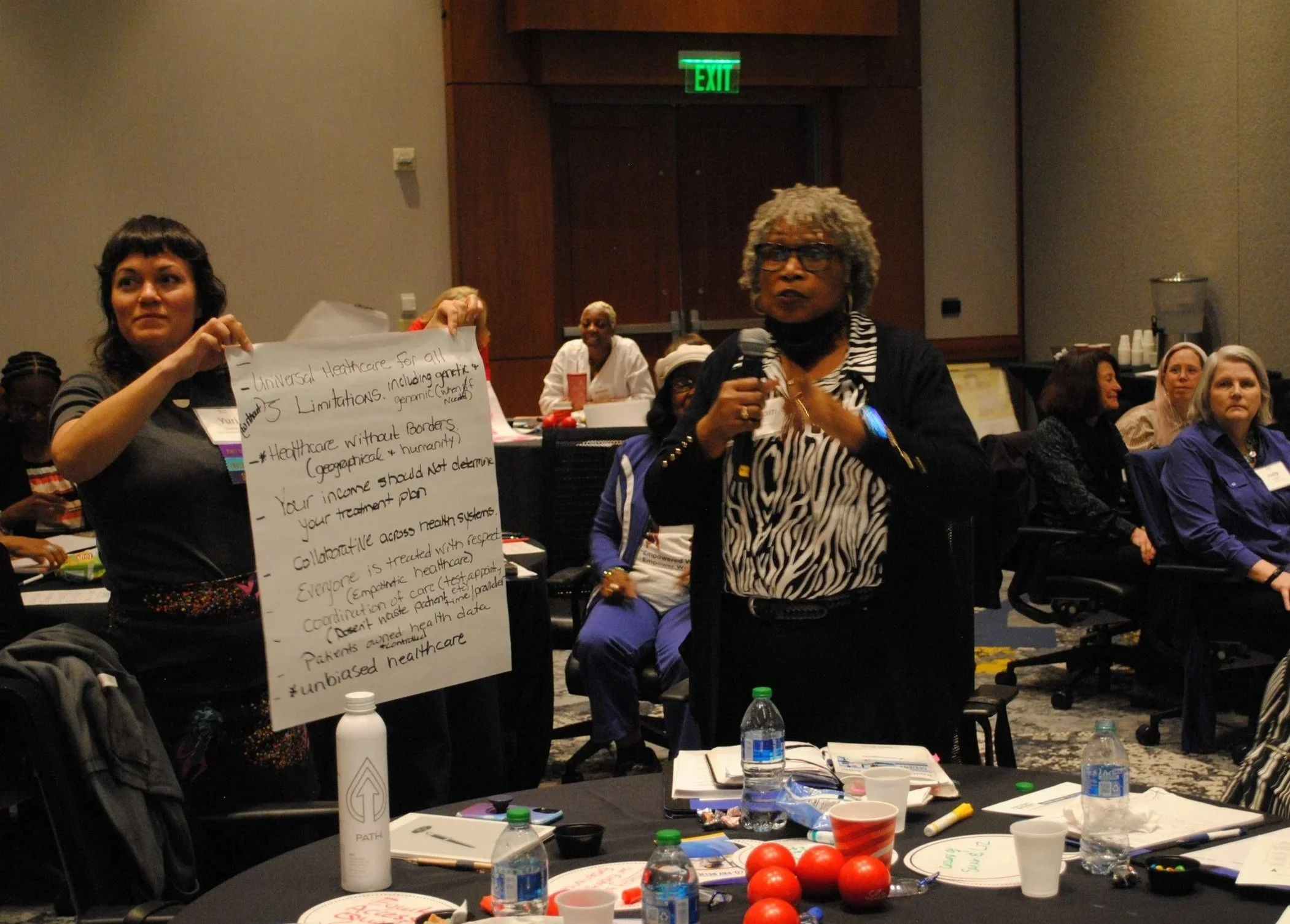
One particularly impactful project was a special issue of the journal Health Services Research. As guest editors, SIREN and PAF worked with the journal to enable the ExEs to review abstracts submitted for the issue and help determine which would submit a full manuscript. The ExEs remained highly engaged throughout a long Learning Community meeting during which they reviewed nearly 20 abstracts. At the end they asked when they could review the full manuscripts which led to the journal building new processes to integrate ExEs as community reviewers on submitted manuscripts. Their unique backgrounds brought a whole new perspective to the peer review process.
The partnership between PAF/PII and SIREN has grown from a chance conversation into a sustainable infrastructure that advances meaningful patient and community engagement in social care research. Over nearly five years, we have built enduring trust between our organizations and among researchers and ExEs, whose contributions have directly informed and strengthened research at every stage. There is still important work to be done to ensure lived experience drives research, and we look forward to continued collaboration with PII and the ExEs, who generously share their time and expertise.