
Advocating for Food Insecure Families with Food Allergies in Rural Mississippi
Natalie Minton, PhD Student and Research Assistant, Department of Pharmacy Administration, The University of Mississippi
Sophie Hathaway, Director of Community Engagement and Outreach, Community Foundation of Northwest Mississippi
February 6, 2026
Imagine that one morning while you are at work, you get a call from your childcare provider telling you that your child can’t breathe and must be taken to the hospital. As a parent living in rural Mississippi, you panic. The nearest hospital is 45 miles away and ambulance availability is unpredictable. At the hospital, they tell you that your child experienced anaphylaxis from food that they ate at daycare. No one stops to explain what a food allergy is. Your child is discharged without an EpiPen, no referral for allergy testing, and no educational material on food allergies. You and your child’s life will never be the same.
After that day, your monthly expenses double, and you start running out of money. You spend all your savings on an EpiPen, insurance doesn’t cover Benadryl, and you have to buy food without dairy because of your child’s allergy. Your daycare never remembers that your child can’t have milk, and grandma insists that your child’s allergies are just picky eating. It feels like you’re in this alone.
Over the summer of 2025, my research partner and I travelled across my home state of Mississippi to understand the experiences of rural households who are food-insecure and have food-allergic children. We cast our net wide, and spoke with parents, grandparents, aunts, cousins, food pantry operators, and clinicians. The story above is one we heard over and over again across the state. 400 conversations later, here is what we learned.
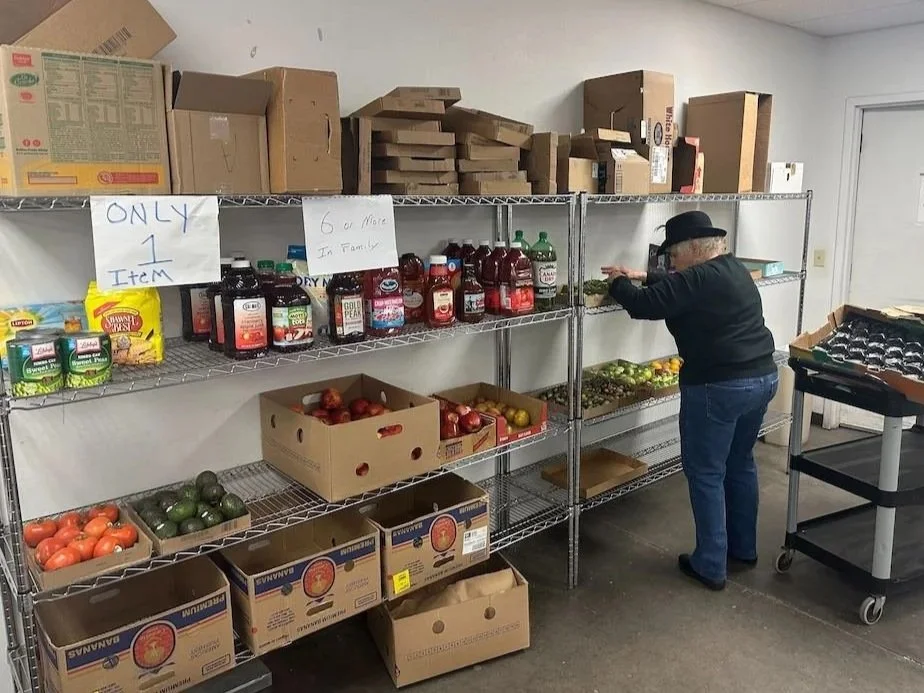
While moving car-to-car down food pantry distribution lines asking, “Do you or anyone in your household have a food allergy?” we received responses like, “no, we’re not sick like that,” “we’re all healthy in my house,” or “we’re not picky.” But sometimes food pantry clients would initially answer “no” to our screening questions, and then later explain how their mouths will swell up when they eat certain foods.
These interactions helped us understand that food allergies aren’t just commonly misunderstood, they aren’t understood at all. Even people who have a potentially life-threating allergy were not aware of their condition and didn’t have access to educational or clinical resources that could improve their quality of life.
We consulted clinicians from three different allergy clinics in Mississippi to try and understand this educational gap, and to our surprise, the clinicians were just as surprised as we were. They could not believe that in 2025, people still did not understand food allergies; but also acknowledged that as clinicians, public education has not been their priority.
While there is a robust amount of data on the intersection of food allergies and food insecurity published in academic journals, this information is not reaching those who need it. As researchers, clinicians, and allergy advocates, we need to be equipping our patients, participants, and community members with the information they need to care for themselves and their families. We also need to be equipping our supplemental food providers with training to meet the needs of food-allergic clients and implement client-choice in the pantry.
My research partner and I have now hosted three food allergy workshops since this summer and are developing a food allergy curriculum for food pantries. We encourage you to join us and support your patients by making allergy education and community outreach a priority.